
 704-377-3737









Trusted Underride Truck Accident Lawyers Charlotte, North Carolina
When a car slides beneath a tractor-trailer, the trailer usually strikes the windshield and roof instead of the bumper. That is why the underride cases we handle in Charlotte so often involve brain injuries, spinal cord damage, or the loss of a family member.
If you were hurt or lost someone in one of these crashes, a Charlotte underride truck accident attorney can lock down the trailer, the truck’s electronic data, and the guard itself before the trucking company repairs or replaces them. At Dewey, Ramsay & Hunt, P.A., that is where every case begins.
Where Underride Crashes Happen Around Charlotte
Charlotte sits where I-77 and I-85 meet, and freight moving through the Norfolk Southern intermodal yard at Charlotte Douglas International Airport and the distribution centers along Wilkinson Boulevard and Westinghouse Boulevard puts tractor-trailers on nearly every major road in Mecklenburg County. Over the years, we have noticed that underride crashes here tend to follow two patterns.
Rear Underride Collisions
A car strikes the back of a trailer and slides beneath it. We see this when a truck brakes hard in stop-and-go traffic on the Brookshire Freeway, merges slowly onto I-485, or sits disabled on an I-85 shoulder near the Little Rock Road exit at night without warning triangles.
Side Underride Collisions
A car passes under the side of a trailer that is turning, backing, or crossing several lanes. Trucks pulling out of yards along Statesville Avenue and Sunset Road create this hazard daily, especially before sunrise, when a dark trailer can blend into the roadway.
Why Underride Crashes Are So Often Fatal
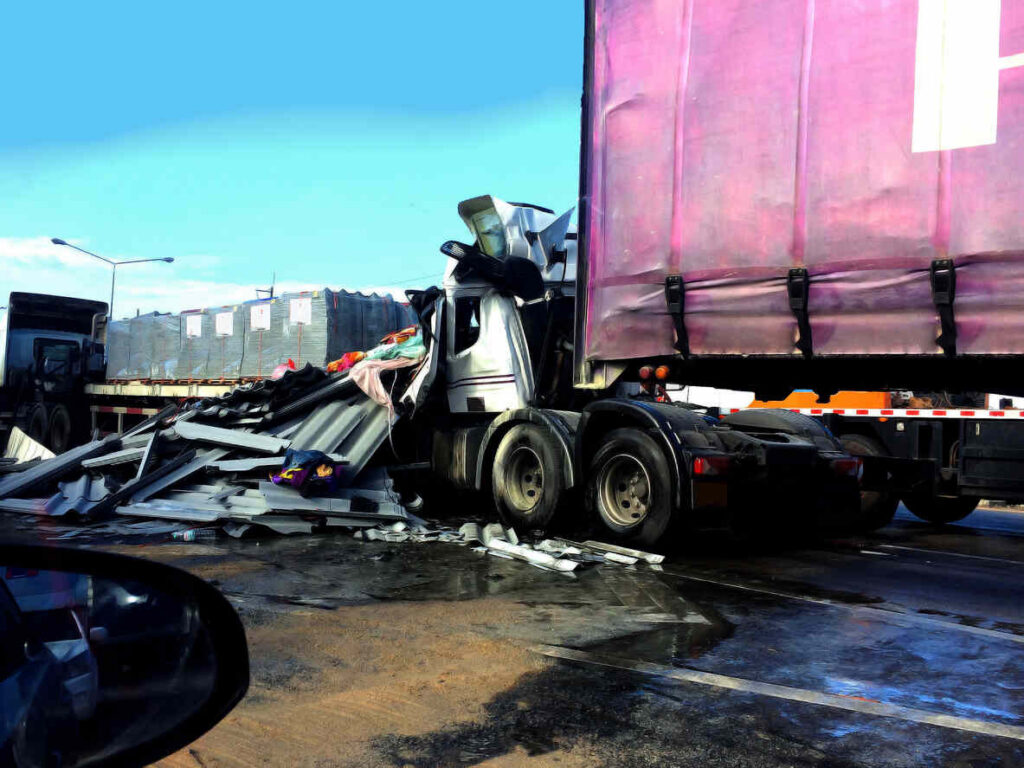
Passenger cars are engineered to absorb a crash through the bumper, hood, and crumple zones. A trailer bed rides above all of them, so when the guard fails, airbags may deploy too late or not at all. The data shows how serious the problem is:
- The National Highway Traffic Safety Administration reports that 5,340 people were killed in crashes involving large trucks in 2024, and 70 percent of them were occupants of other vehicles.
- The U.S. Government Accountability Office found an average of about 219 underride deaths each year from 2008 through 2017 and concluded the real number is likely higher because many crash report forms do not record underride.
- The Federal Motor Carrier Safety Administration counted 156 fatal crashes involving a large truck or bus in North Carolina in 2021.
Survivors commonly face traumatic brain injuries, spinal cord injuries, facial fractures, and amputations. Too many of these collisions end in a wrongful death claim.
Who Can Be Held Responsible
In most of the under-ride claims we review, more than one party contributed to the crash. Naming each one matters, because a single insurance policy may not cover a lifetime of care.
- The truck driver, for following too closely, turning unsafely, driving fatigued or distracted, or failing to set out warning devices around a stopped truck.
- The motor carrier, for poor hiring, training, or supervision, and for keeping a trailer on the road with a damaged guard.
- The trailer or guard manufacturer, when the guard is poorly designed or fails at speeds it should withstand.
- Maintenance contractors, who may have missed a bent or corroded guard or let lighting and reflective tape wear away.
The Safety Rules Behind Most Underride Claims
Our attorneys measure each case against the federal rules trucking companies must follow. The ones that come up most often include:
- Rear impact guards. Under 49 CFR 393.86, most trailers must carry a rear guard in good condition. NHTSA’s 2022 final rule now requires guards on new trailers to protect occupants of smaller cars in 35 mph crashes.
- Conspicuity tape. 49 CFR 393.11 requires red-and-white reflective tape on the sides and rear of most trailers, which is crucial for nighttime visibility.
- Warning devices. 49 CFR 392.22 requires hazard lights and warning triangles when a truck stops on or beside a highway.
No federal rule yet requires side underride guards. Even so, a manufacturer’s decision to leave them off can still be examined in a product liability claim.
What to Do After an Underride Crash in Charlotte
If you are able, or if a family member can help, these steps protect your claim:
- Get medical care right away and follow every treatment recommendation.
- Request the crash report and keep copies of all medical records and bills.
- Photograph the vehicles, the trailer’s rear and sides, and the scene if it is safe to do so.
- Do not give a recorded statement to the trucking company’s insurer.
- Call an underride truck accident lawyer Charlotte families trust at 704-377-3737 before the trailer is repaired or put back into service.
This is the kind of work underride truck accident attorneys Charlotte families hire should start immediately, because evidence in these cases disappears fast.
How We Build Your Case
When a family contacts our office on Metromont Parkway, we move quickly on four fronts:
- Sending preservation letters for the trailer, engine control module data, and electronic logging device records.
- Collecting dash camera, traffic camera, and nearby business surveillance footage.
- Working with reconstruction engineers to measure guard deformation, intrusion depth, and sight lines.
- Subpoenaing the driver qualification file, inspection reports, and maintenance logs.
North Carolina Laws That Affect Your Claim
North Carolina follows contributory negligence, which can bar an injured person from any recovery if they are found even slightly at fault. Trucking insurers rely on this rule and often claim the car driver was speeding or following too closely. An underride truck accident lawyer Charlotte families can rely on must be ready to defeat that argument with evidence and, where it applies, the last clear chance doctrine. Learn more about how fault is determined in North Carolina.
Deadlines are strict. Most personal injury claims must be filed within three years under N.C. Gen. Stat. 1-52, while wrongful death claims generally must be filed within two years under N.C. Gen. Stat. 1-53.
We Don’t Get Paid Until You Do
Your Injury Our Fight
Call us at (704) 377-3737, or contact us online
Compensation You May Recover
Interstate freight carriers must carry at least $750,000 in liability coverage, and many carry far more. Depending on the facts, a claim may include:
- Emergency care, surgery, rehabilitation, and future medical treatment
- Lost wages and reduced earning capacity
- Home modifications and long-term care
- Pain, suffering, and loss of enjoyment of life
- Funeral costs, lost income, and loss of companionship in a wrongful death case
When a carrier knowingly kept a damaged guard in service or falsified inspection records, North Carolina law may also allow punitive damages.
Attorneys Who Handle Your Case Personally
Families choose our Charlotte underride truck accident lawyers because the attorney they meet is the attorney who works the case.
Brian C. Hunt focuses on truck accidents and wrongful death cases. He is an Elon University School of Law graduate and a National Trial Lawyers Top 40 Under 40 honoree.
Founding attorney Martha L. Ramsay has practiced in North Carolina since 1993. She is a Board Certified Workers’ Compensation Specialist and handles on-the-job injury claims alongside trucking claims.
For more than 30 years, our lawyers have represented people hurt in commercial truck collisions across the Charlotte region. As underride truck accident attorneys Charlotte residents trust, we keep caseloads small, so every client gets real attention.
Speak With a Charlotte Underride Truck Accident Attorney Today
Trucking company investigators often arrive within hours. You deserve someone gathering evidence for your side just as fast. Consultations are free, and we work on a contingency fee basis, so you pay no attorney fees unless we recover compensation for you.
Call Dewey, Ramsay & Hunt, P.A. at 704-377-3737 or contact us online. Our office is located at 10610 Metromont Parkway, Suite 205, Charlotte, NC 28269.
