
 704-377-3737



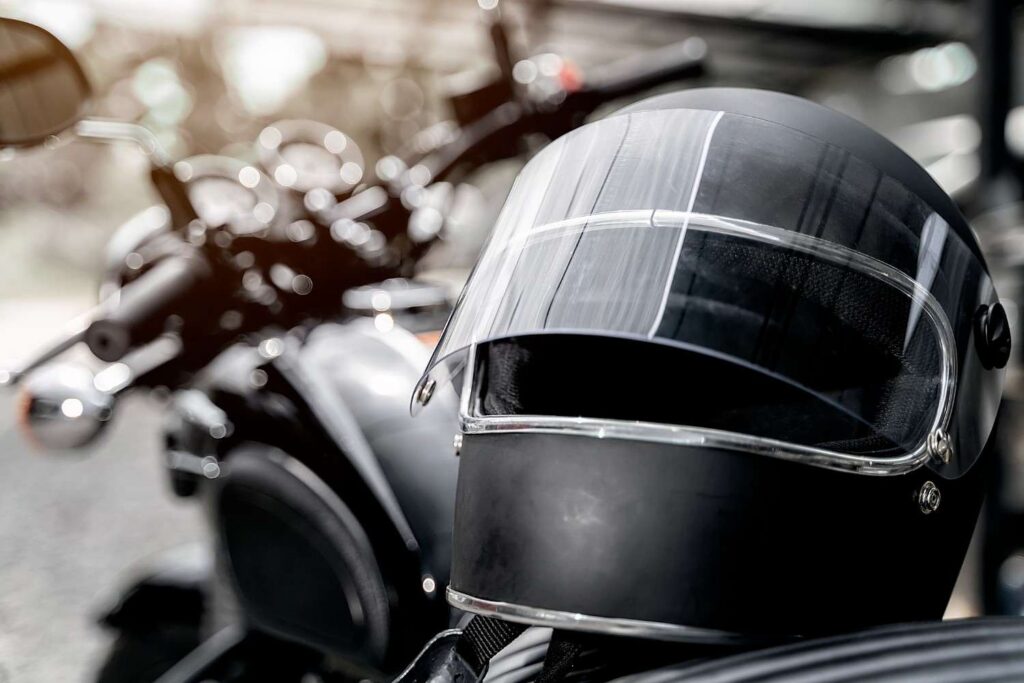
Motorcyclists have little protection in a collision, making helmets an important safety measure and, in North Carolina, a legal requirement.
In 2024, 193 motorcyclists were killed, and 3,255 were injured in crashes across the state. Knowing what North Carolina requires before riding a motorcycle matters. So is understanding how helmet use may come into play if a rider is injured in a crash caused by someone else.
Who Has to Wear a Motorcycle Helmet in North Carolina?
North Carolina requires motorcycle operators and passengers to wear helmets. Unlike states that limit helmet requirements to younger or inexperienced riders, the law applies to everyone.
The helmet must comply with Federal Motor Vehicle Safety Standard 218, and its retention strap must be properly secured.
A compliant helmet should have a permanent Department of Transportation (DOT) symbol on the back, along with appropriate manufacturer labeling and a sufficiently thick inner liner. Simply placing a DOT sticker on a novelty helmet does not make it compliant.
What Happens If You Ride Without a Required Helmet?
Violating North Carolina’s motorcycle helmet requirement is an infraction. However, the law makes an important distinction between receiving a citation and determining responsibility for a motorcycle accident.
Under North Carolina law, violating the helmet statute is not considered negligence per se or contributory negligence per se in a civil case.
This matters because North Carolina follows a contributory negligence rule, which may prevent an injured person from recovering compensation if they contributed to the accident.
Does Helmet Use Determine Who Caused the Crash?
Whether someone was wearing a helmet and who caused a motorcycle collision are different questions.
A motorcyclist could be wearing a fully compliant helmet and still be seriously injured when another driver turns into their path, fails to yield, follows too closely, or makes an unsafe lane change. Likewise, a helmet violation does not establish that the motorcyclist caused the collision.
Determining liability requires looking at what happened before the impact. Evidence such as the crash report, photographs, witness statements, surveillance or dashcam footage, and vehicle damage may help establish fault.
A Helmet Cannot Prevent Every Motorcycle Injury
Even a properly fitted helmet cannot eliminate the risk of traumatic brain injuries, fractures, spinal injuries, road rash, or other serious harm when a motorcycle and larger vehicle collide.
After a serious North Carolina motorcycle crash, it is important to investigate both how the collision happened and the losses the injured rider has suffered.
If another driver caused your motorcycle accident, Dewey, Ramsay & Hunt, P.A. can evaluate what happened and explain your options for pursuing compensation. Call 704-377-3737 or contact us online today for a free consultation. We tailor our representation to each client’s circumstances, and we don’t take an attorney’s fee unless we obtain compensation for you.
Your Injury, Our Fight. How can we help you take a stand?
Because every case is different, the description of awards and cases previously managed by our law firm does not guarantee a similar outcome in current or future cases.
